Toddler discovery gifts
Large-piece sets emphasize grip, stacking, and color sorting. They work for early birthdays, daycare corners, and family shelves where safety language must be immediate and plain.
For Knex, the industry axis is not a factory vertical. It is the consumer path from first construction confidence to story-led collectible play. This page groups use cases by recipient, age moment, and occasion so a buyer can match a set to the real decision being made at home, in a classroom, or in a retail aisle.
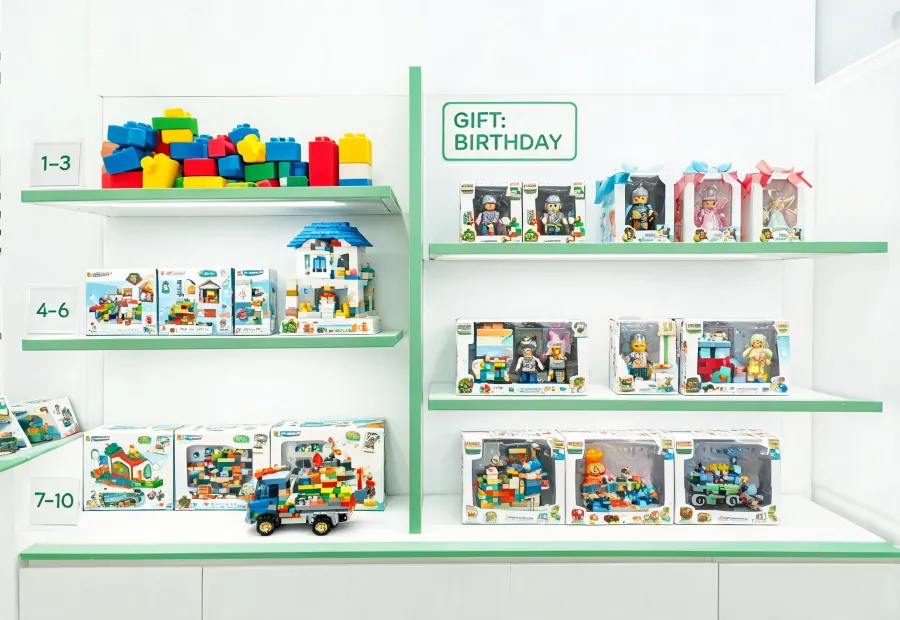
Each card keeps the product promise specific: who is receiving the set, why it is being chosen, and what kind of play should happen next.
Large-piece sets emphasize grip, stacking, and color sorting. They work for early birthdays, daycare corners, and family shelves where safety language must be immediate and plain.
Preschool assortments add guided challenges while keeping success visible. Simple character scenes encourage children to finish a model and then continue pretend play.
Older children can handle more pieces, moving parts, and repeatable design tests. These sets fit after-school programs, holiday gifting, and parent-led enrichment.
Character-led kits suit birthdays, seasonal edits, and display-driven shopping. They add narrative value to construction play without turning the range into unrelated merchandise.
These stage cards translate category planning into the language parents use when choosing for a child.
Focus on oversized components, visible color contrast, and short play loops. Adults want low-friction clean-up and clear small-parts guidance at this stage.
Introduce simple instructions, character prompts, and early building sequences. The main value is confidence: children can recognize the goal and still improvise.
Offer motion, symmetry, and challenge without making the build feel like homework. Sets should reward trial, rebuilds, and proudly displayed results.
Make the decision obvious with a concise theme, age band, and play outcome. Gift shoppers need enough detail to choose quickly and avoid duplicate-feeling sets.
Use tight naming and category separation so a planogram can carry both building and role-play stories without confusing the shopper journey.
Start with the child's preferred play rhythm. If they enjoy making, testing, and rebuilding, choose a construction-focused set. If they stay longer with characters and scenes, choose a role-play collectible kit or a hybrid that gives the finished build a story.
Look for larger pieces, fewer assembly steps, strong visual cues, and direct safety notes. Younger children need quick wins and clear adult supervision guidance, especially when small accessories are part of the assortment.
Yes, when the range is edited by time, piece count, and storage format. Short challenge sets can support small group play, while larger build tubs are better for rotating activity stations and repeated shared use.
Durability is a practical sustainability measure. A toy that can be rebuilt, passed down, and stored without fragile single-use packaging creates more value over time than a set chosen only for a single novelty moment.
Send us the age range and occasion. Knex will suggest a concise building or role-play assortment for the moment.